





When people think about weight loss, they often focus on cardio and calorie restriction. However, strength training can also play an important role in a balanced weight-management plan. Resistance exercises can help build and maintain muscle while improving strength, physical function, and overall fitness.
Furthermore, strength training can make your body more capable of handling everyday activities and other forms of exercise. When you combine resistance training with nutritious eating, regular movement, and adequate recovery, you can create a sustainable approach to weight management.
The goal is not to find one exercise that produces instant results. Instead, focus on building a consistent routine that supports your health and fitness over time.
Understand the Role of Strength Training
Strength training involves working your muscles against resistance. You can use your body weight, resistance bands, dumbbells, barbells, or gym machines.
During weight management, resistance training can help preserve muscle as your body weight changes. Maintaining muscle can support physical strength and help you maintain a healthy body composition.
Therefore, strength training should complement—not replace—balanced nutrition and regular physical activity.
Build and Maintain Muscle
Muscle tissue requires energy to maintain, and resistance training provides a stimulus that helps your muscles adapt and become stronger.
When you regularly challenge your muscles, your body works to repair and adapt to that training.
However, do not expect strength training alone to produce dramatic weight loss. Sustainable weight management depends on your overall energy balance, nutrition, activity level, sleep, and other lifestyle factors.
Instead, view strength training as one important component of a broader fitness strategy.
Support Your Metabolism
Building and maintaining muscle can contribute to your overall energy expenditure. However, claims that strength training dramatically increases metabolism often exaggerate its effect.
Your body uses energy for many functions, including maintaining tissues and supporting daily movement. Muscle contributes to this energy use, but changes in resting calorie expenditure are usually more modest than some fitness claims suggest.
Therefore, focus on the broader benefits of strength training rather than relying on it as a way to burn large numbers of calories.
Improve Workout Performance
As you become stronger, everyday activities and other workouts may become easier.
For example, stronger legs can make walking, climbing stairs, cycling, or recreational activities more comfortable. Stronger upper-body muscles can also help with lifting and carrying tasks.
Consequently, improved strength can make it easier to remain active throughout the day.
This increased physical capability can support a more active lifestyle, which plays an important role in long-term weight management.
Combine Strength Training With Cardio
You do not need to choose between strength training and cardiovascular exercise.
Cardio activities such as brisk walking, cycling, swimming, and jogging can improve cardiovascular fitness, while strength training develops muscular strength and endurance.
Therefore, consider combining both forms of exercise throughout your week.
For example, you might perform resistance workouts several days per week and add walking or another cardiovascular activity on other days.
Adjust your schedule according to your fitness level, goals, and recovery needs.
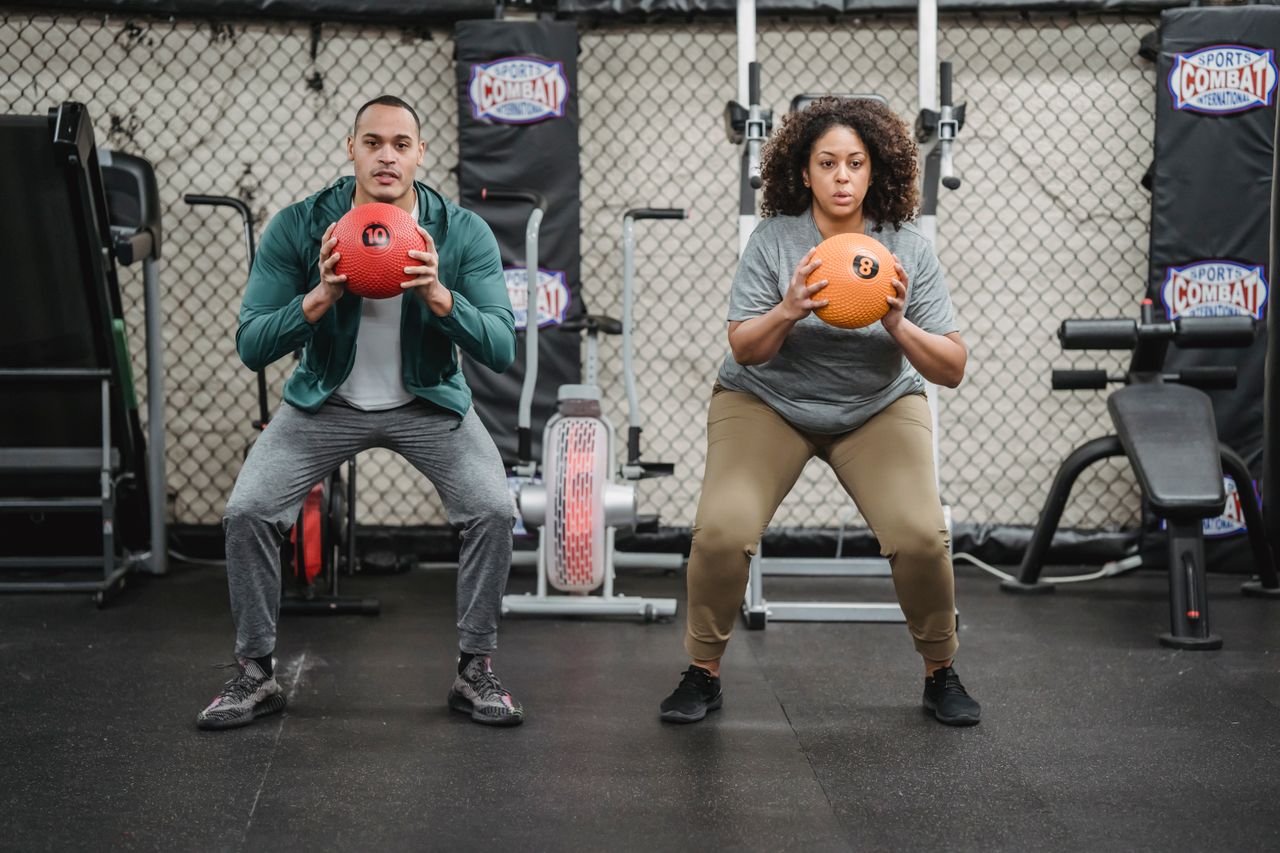
Use Full-Body Exercises
Beginners can often benefit from simple exercises that target several major muscle groups.
Examples include squats, lunges, rows, presses, hip hinges, and modified push-ups.
A full-body workout can provide an efficient way to train multiple muscle groups without requiring long gym sessions.
Start with manageable resistance and focus on proper technique. Then, gradually increase repetitions, resistance, or training difficulty as your fitness improves.
Progress Gradually
Your body needs time to adapt to resistance training. Therefore, avoid increasing the workload too quickly.
Start with a manageable routine and gradually increase the challenge.
You might begin with bodyweight exercises before adding resistance. Later, you can increase the weight or repetitions while maintaining good form.
Progressive training can help you continue developing strength without unnecessarily overwhelming your body.
Focus on Nutrition
Strength training works best when you support your body with adequate nutrition.
Include protein-rich foods such as eggs, fish, poultry, yogurt, beans, lentils, tofu, nuts, and seeds.
Also, eat nutritious sources of carbohydrates, healthy fats, fruits, and vegetables.
If your goal involves fat loss, avoid drastically reducing food intake. Your body still needs sufficient nutrients and energy to support daily activities and exercise.
For personalized nutrition guidance, consider consulting a qualified healthcare or nutrition professional.
Stay Active Outside the Gym
Your total daily movement matters as well. Therefore, do not limit physical activity to scheduled workouts.
Walk during breaks, use stairs when appropriate, perform household tasks, garden, or participate in recreational activities.
These activities can increase your overall movement and help create an active lifestyle.
Furthermore, choose activities you enjoy. When movement feels enjoyable rather than forced, you may find it easier to remain consistent.
Prioritize Recovery
Recovery is essential when you perform strength training regularly. Your muscles need time to repair and adapt between demanding workouts.
Therefore, allow adequate rest between sessions targeting the same muscle groups.
Sleep also plays an important role in overall recovery. Maintain a consistent sleep routine and give your body enough time to rest.
If you experience persistent pain, unusual fatigue, dizziness, or other concerning symptoms, stop exercising and seek appropriate professional guidance.
Track Strength Improvements
Weight loss is not the only way to measure progress. Therefore, track changes in your strength and workout performance.
Record the exercises you perform, repetitions, sets, and resistance. Over time, you may notice that you can perform more repetitions or use greater resistance with proper technique.
These improvements can demonstrate meaningful progress even if the scale changes slowly.
Be Patient With Results
Body composition changes take time. Therefore, avoid expecting immediate results from strength training.
Your weight may fluctuate for many reasons, including changes in fluid levels and food intake. In addition, gaining muscle while losing fat can sometimes result in relatively small changes on the scale.
Instead, consider several indicators, including strength, measurements, fitness, clothing fit, and overall consistency.
A broader view can help you recognize improvements that the scale alone may not show.
Create a Sustainable Training Routine
Understanding how strength training supports weight loss can help you build a more balanced fitness strategy. Resistance exercise can help maintain muscle, improve strength, support physical function, and encourage a more active lifestyle.
Combine strength training with cardiovascular activity, nutritious eating, hydration, adequate sleep, and regular daily movement.
Most importantly, focus on consistency rather than extreme workouts. Start at an appropriate level, progress gradually, and allow your body enough time to recover.
With realistic expectations and sustainable habits, strength training can become a valuable part of a long-term approach to weight management, fitness, and overall wellness.

